
Hot Tub Water Balance for Hot Spot Owners: pH, Alkalinity, and Calcium Hardness Made Simple
Posted by HTSS Team on Sep 14th 2026
Hot Tub Water Balance for Hot Spot Owners: pH, Alkalinity, and Calcium Hardness Made Simple
Clear water is not the same as healthy water. Your Hot Spot spa can look sparkling while its chemistry quietly drifts out of range, and when that happens, sanitizer stops working efficiently, skin and eyes get irritated, and scale or corrosion starts building inside the heater and plumbing. The good news is that balancing hot tub water comes down to three measurements and a simple order of operations. Once you learn them, a weekly test takes only a couple of minutes.
This guide explains what total alkalinity, pH, and calcium hardness do, the ranges to aim for, the correct order for adjusting them, and how to keep your water in balance with a simple routine.
Balance Versus Sanitizing
Water care has two separate jobs. Sanitizing kills bacteria and breaks down contaminants. Balancing keeps the water in a chemical state where the sanitizer works well and the water is comfortable and non-damaging. Many Hot Spot spas use a system like @ease with SmartChlor for sanitizing, but no sanitizing system replaces balancing. In fact, most sanitizers work best, and last longest, in balanced water.
The Three Numbers That Matter
Total Alkalinity: The Stabilizer
Total alkalinity measures the water's ability to resist changes in pH. Think of it as a shock absorber. When alkalinity is too low, pH swings up and down with every soak and every chemical addition. When it is too high, pH tends to climb and is hard to bring down.
Target: Hot Spring's water care guidance, used across its collections, recommends a total alkalinity of about 80 ppm, with an acceptable range of 40 to 120 ppm.
pH: Comfort and Effectiveness
pH measures how acidic or basic the water is. Low pH can irritate eyes and skin and corrode metal components. High pH reduces sanitizer effectiveness and encourages scale and cloudy water.
Target: 7.2 to 7.8.
Calcium Hardness: Protecting the Equipment
Calcium hardness measures dissolved calcium. Too little can make water aggressive toward surfaces and components, and too much leads to scale on the heater, jets, and filters, along with cloudy water.
Target: 75 to 150 ppm for standard water care. If your spa uses a salt system, Hot Spring recommends a lower range of 25 to 75 ppm to protect the salt hardware.
Sanitizer
For standard chlorine care, Hot Spring recommends 1 to 5 ppm, with 3 ppm as a target. If your Hot Spot uses @ease with SmartChlor, follow the test strips and ranges supplied with that system, since it is designed to work at lower chlorine levels than a traditional chlorine routine.
The Right Order for Adjusting
Order matters, because each adjustment affects the next one. Follow this sequence:
- Total alkalinity first. Because it stabilizes pH, adjusting it first prevents you from chasing pH back and forth.
- pH second. Once alkalinity is in range, pH is much easier to set and hold.
- Calcium hardness third. This one changes slowly and is mostly set at fill time.
- Sanitizer last. Balanced water lets your sanitizer do its job efficiently.
How to Add Chemicals Safely
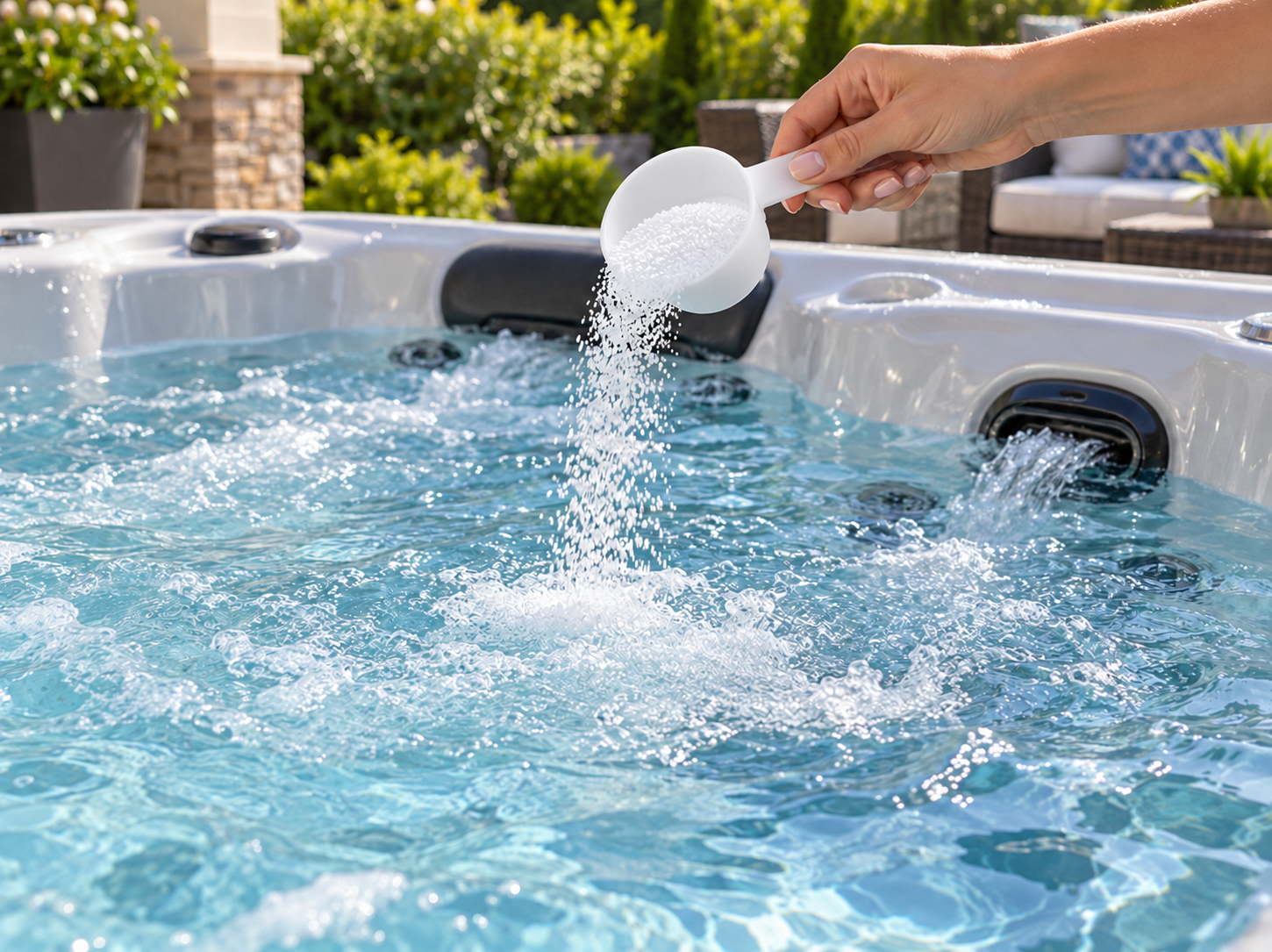
- Test first, then add only what the test calls for, following product label dosing for your spa's gallons.
- Add chemicals with the jets running so they mix thoroughly.
- Add one chemical at a time, and let the water circulate before adding the next.
- Leave the cover open briefly after adding chemicals so gases can escape instead of being trapped against the cover.
- Retest after circulation before making further adjustments. Small corrections are better than big ones.
Common Balance Problems and Fixes
pH Keeps Rising
Rising pH is common, especially in newly filled spas and in water with high alkalinity. Aeration from jets also nudges pH up over time. Check alkalinity first. If it is high, bring it down with a pH and alkalinity decreaser, then retest pH.
pH Will Not Stay Put
If pH bounces every time you test, alkalinity is probably too low. Raise alkalinity into range and pH will settle down.
White Crust on Jets or the Waterline
That is scale, usually from high calcium combined with high pH or alkalinity. Bring pH and alkalinity into range. If scale is heavy, a drain and refill with a calcium-reducing product or a pre-filter may be the best fix.
Itchy Skin or Red Eyes
Check pH first. Water that is too low or too high is a common cause of irritation. Also confirm sanitizer is in range, neither too low nor too high.
How Balance Protects Your Hot Spot's Equipment
Water balance is not only about comfort. It directly affects the parts that keep your spa running. Hot Spot spas are built around efficient heating and circulation, and those systems depend on clean, unrestricted water flow. When calcium hardness, pH, or alkalinity run high for weeks at a time, scale forms on the heater element, inside jets, and throughout the plumbing. Scale acts as insulation on the heater, so it takes more energy to warm the water, and it narrows passages so pumps work harder. Over time, that can shorten the life of components and trigger flow-related shutdowns.
Water that runs too low in pH or alkalinity causes the opposite problem. Aggressive, acidic water can etch surfaces and corrode metal parts, including heater components and fittings. Neither extreme shows up overnight, which is why regular testing matters. Catching a drift early means a small, inexpensive correction instead of a scale problem or a repair.
Understanding Your Test Strips
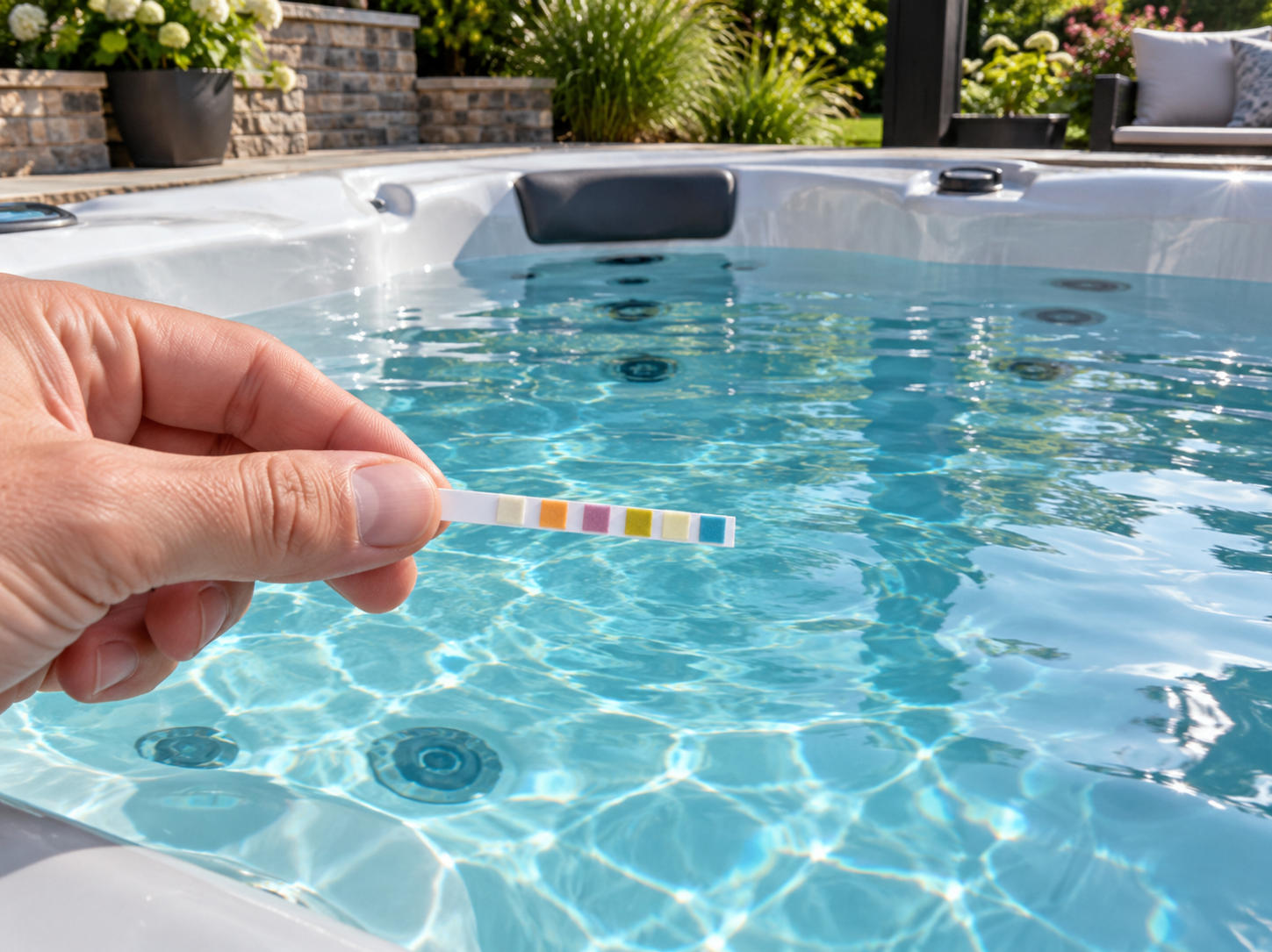
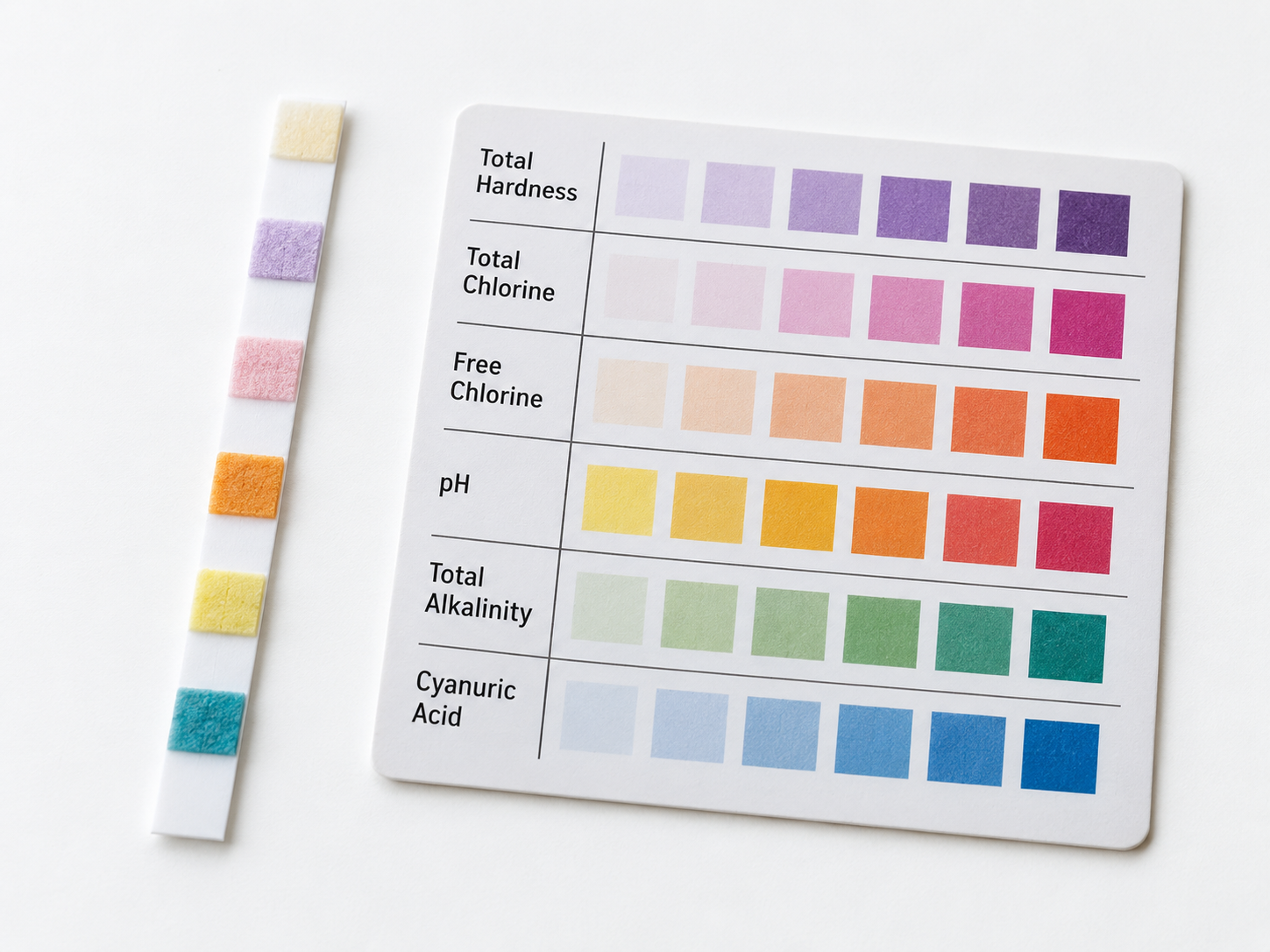
Test strips are the easiest way to check balance at home. Dip the strip briefly, hold it level so the pads do not bleed into each other, and compare it to the chart within the time the label specifies. Reading too early or too late can give false results. Test in good light, and use strips before their expiration date. If a reading looks surprising, test again with a fresh strip before adding chemicals. For a second opinion, many owners bring a water sample to a spa dealer a few times a year for a more detailed test.
Start With the Fill Water
Balance starts the day you fill the spa. Tap water varies widely in hardness, alkalinity, and metals. Test your fill water so you know what you are working with. If your water is very hard, a hose pre-filter and a calcium-reducing product can make balancing much easier for the life of that fill. If you are on well water, treat for metals before adding sanitizer, since metals can stain surfaces and discolor water.
A Simple Weekly Routine
- Test at least once a week, and after heavy use or a big rainstorm.
- Adjust in order: alkalinity, pH, calcium, sanitizer.
- Top off evaporated water, and retest afterward, since fresh water changes the balance.
- Rinse filters on schedule so the sanitizer is not overwhelmed by debris.
- Change the water every few months, or when it becomes hard to balance.
Balancing After Topping Off or Rain
Evaporation removes water but leaves minerals behind, so every top-off with fresh tap water shifts your balance slightly. Rain that gets into an uncovered spa dilutes sanitizer and can lower pH and alkalinity. Neither is a big problem if you catch it, which is why it is worth running a quick test after adding a significant amount of water or after a storm. Small adjustments right away are far easier than correcting water that has drifted for weeks.
Storing Your Chemicals
Keep chemical containers closed, dry, and out of reach of children and pets, in a cool, shaded place. Never mix chemicals together outside the spa, and always add chemicals to water, never water to chemicals. Replace test strips on schedule and keep the lid tightly closed, since humidity ruins them and gives false readings.
Frequently Asked Questions
What should the pH of my hot tub be?
Between 7.2 and 7.8. Adjust total alkalinity into the 40 to 120 ppm range first, aiming for about 80 ppm, then set pH.
Should I adjust pH or alkalinity first?
Alkalinity first. It stabilizes pH, so setting it first keeps you from chasing pH up and down.
What calcium hardness should my Hot Spot spa have?
For standard water care, about 75 to 150 ppm. Spas using a salt system should stay lower, at 25 to 75 ppm.
How often should I test my hot tub water?
At least weekly, plus after heavy use, big rainstorms, or topping off with fresh water.
Why is my sanitizer not working even though I add plenty?
High pH is a common culprit, since it reduces sanitizer effectiveness. Dirty filters and old water are others. Balance first, clean filters, and consider a water change.
Water balance is the quiet foundation of every good soak. Keep alkalinity near 80 ppm, pH between 7.2 and 7.8, and calcium in the right range for your system, adjust in the right order, and test weekly. Your Hot Spot spa will reward you with water that is clear, comfortable, and easy on your equipment.